



Guides
Green raisins vs black raisins: what's the difference?
Both start as grapes, but they look, taste and cook differently. How green and black raisins compare, where munakka and golden raisins fit in, and how to use each.

In this story 6 sections
Raisins are simply dried grapes, but the grape and the way it is dried change everything. Here is how the two most popular kinds compare, and how to use each one.
Green raisins (kishmish)
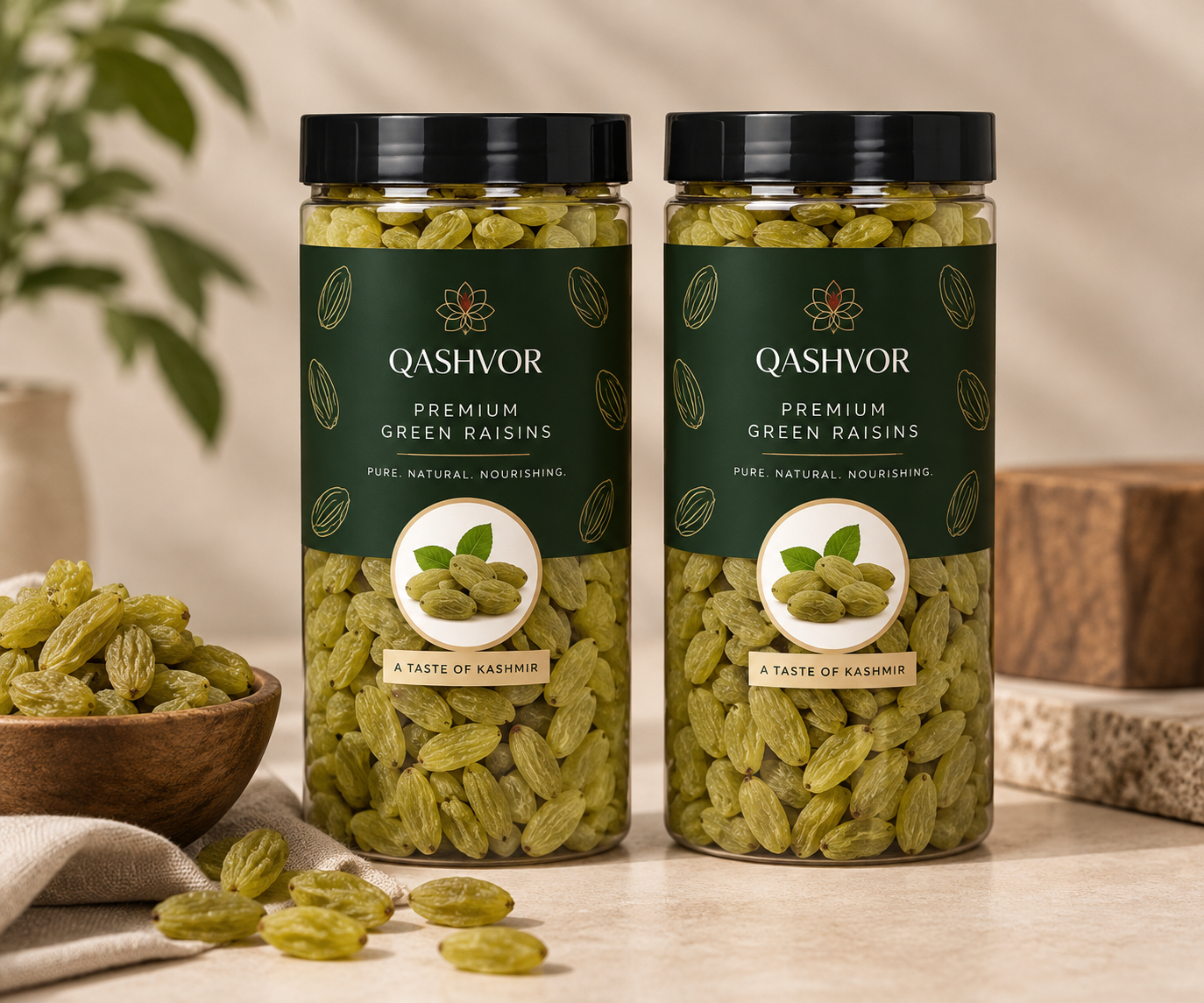
Green raisins are made from green, seedless grapes. They are often dried in the shade, which helps them keep their pale green to golden colour. They are long and slender, soft to bite, and taste sweet with a light tang.
Black raisins
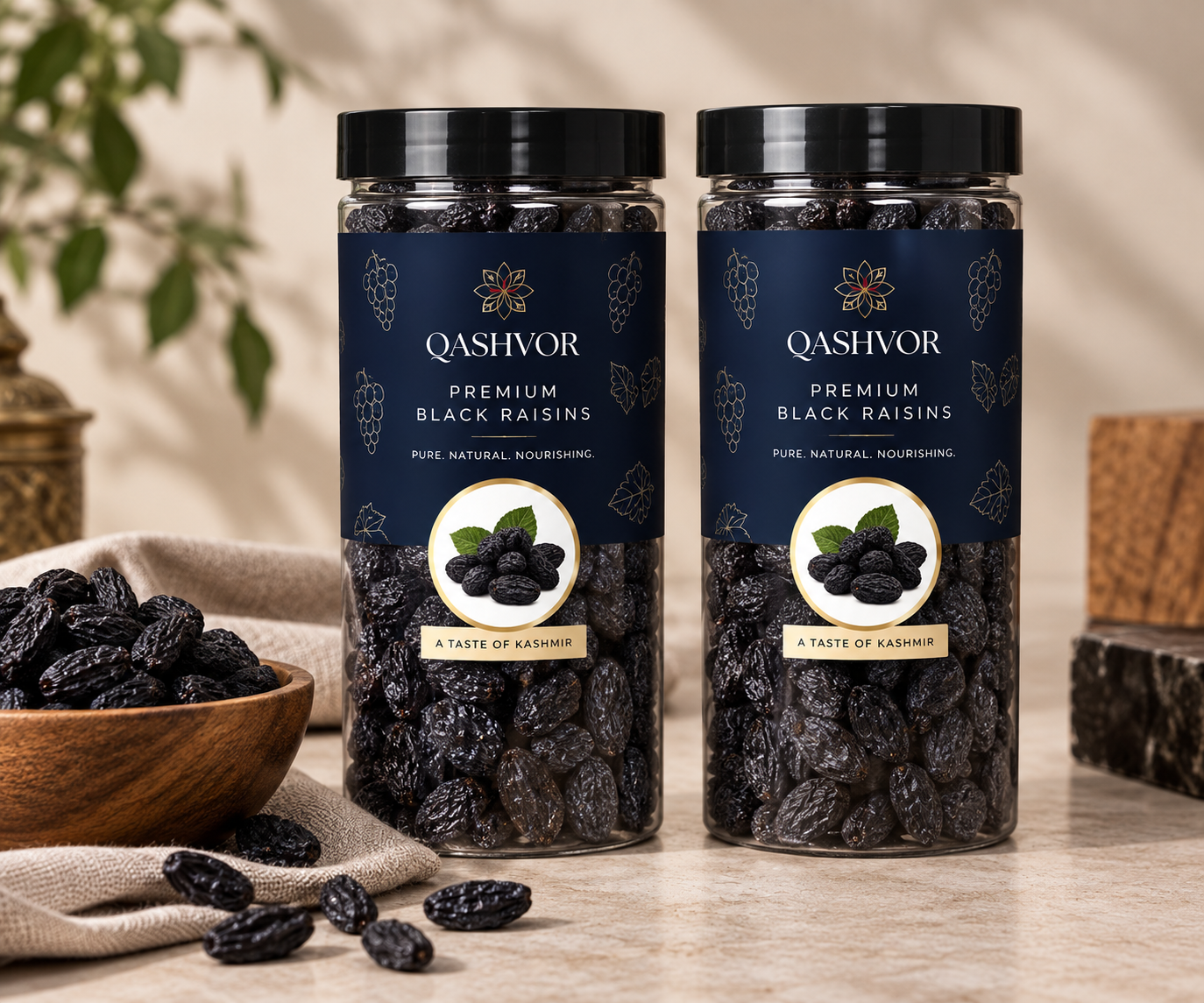
Black raisins are made from dark-skinned grapes and dried to a deep colour. They usually have a fuller flavour, with a mellow, almost caramel-like sweetness and a chewier bite.
Side by side
- Colour: green to golden, against deep purple-black.
- Taste: sweet and tangy, against rich and mellow.
- Texture: soft and slender, against plumper and chewier.
- Best for: green raisins in pulao, biryani, kheer and trail mixes; black raisins for snacking, soaking, baking and rich desserts.
What about munakka and golden raisins?
Munakka are large, dark raisins made from a particular grape variety, often with seeds inside. They are sweeter and stickier than everyday black raisins. Golden raisins are usually treated during drying to keep their bright colour, which gives them a slightly fruitier taste.
Soaking raisins
Many families soak a small handful of raisins in water overnight and eat them in the morning. Soaking plumps them up and makes them softer and juicier. Soaked raisins also blend easily into smoothies and chutneys.
How to store raisins
Keep raisins in an airtight jar in a cool, dry place, or in the fridge in hot, humid weather. If they harden or form little sugar crystals, they are still fine: soak them in warm water for a few minutes to soften them. Our guide on how to store dry fruits has more tips.
Try our Green Raisins in a zafrani pulao, and our Black Raisins in dry fruit ladoo.
The Qashvor Journal
Notes from Kashmir on saffron, dry fruits and the kitchen.


