



Guides
How much saffron should you use? A simple guide for every dish
Too little and you will not notice it; too much and it turns bitter. A practical guide to using saffron in drinks, rice, desserts and bakes.

In this story 4 sections
Saffron is powerful. A few threads can colour and scent a whole dish, and using too many is a common mistake: past a certain point saffron stops tasting floral and starts tasting bitter and medicinal. Here is how much to use, and how to get the most from every thread.
A quick guide
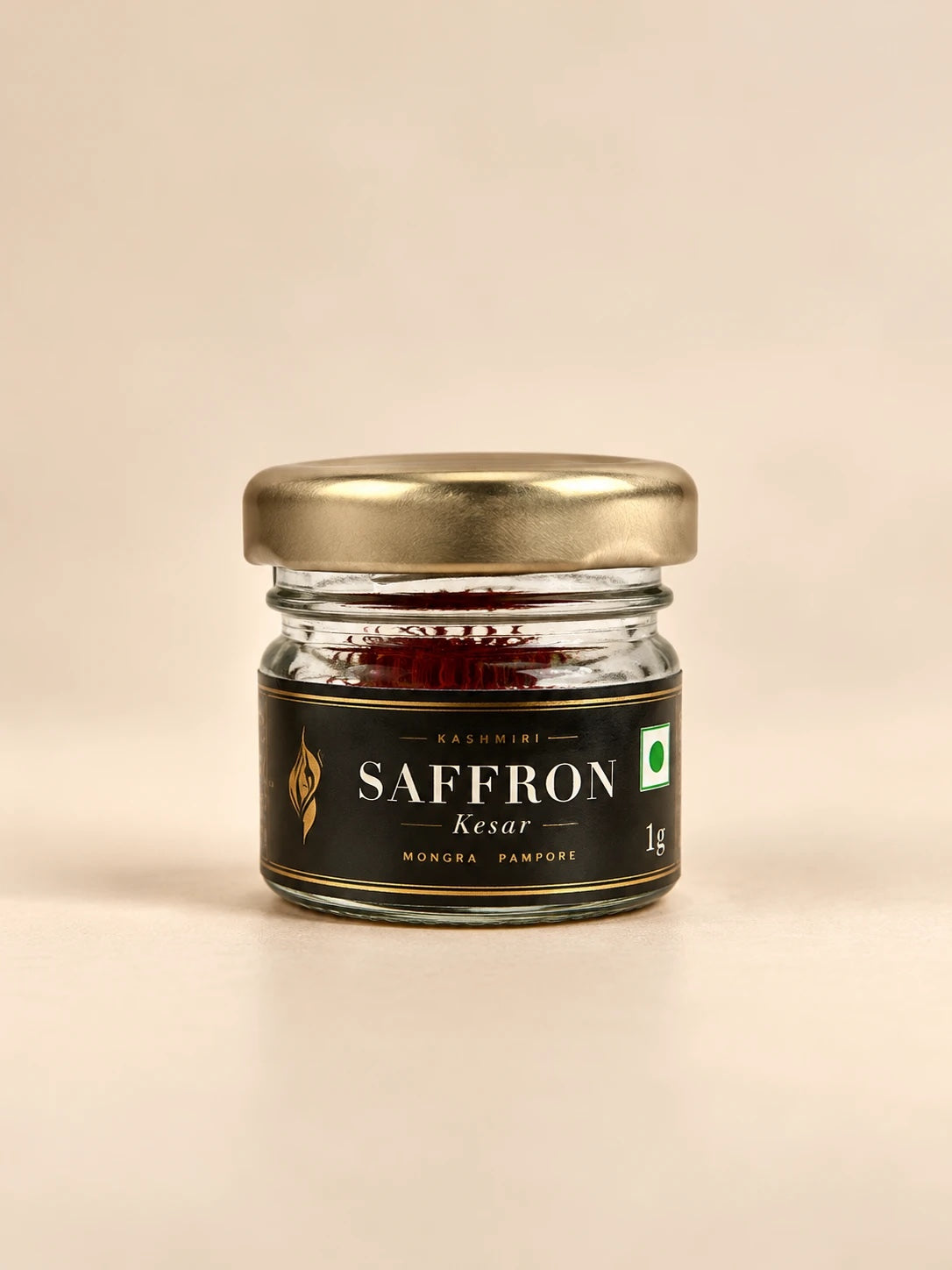
These amounts are for good-quality whole threads, such as Mongra. Start at the lower end; you can always add more next time.
- A cup of kahwa or saffron milk: 3 to 4 threads per cup.
- Rice for four (pulao or saffron rice): 12 to 15 threads.
- Biryani for six to eight: 20 to 25 threads.
- Kheer, phirni or other milk desserts for four to six: 10 to 12 threads.
- Cakes and bakes: 8 to 10 threads for a standard cake, steeped in a little of the recipe's warm milk.
How to draw out the most colour and aroma
- Crush the threads lightly. Rub them between your fingers or use a small mortar and pestle. Breaking the threads helps them release their colour.
- Steep them in warm liquid. Soak them in 2 to 3 tablespoons of warm (not boiling) water or milk for 15 to 20 minutes. The longer they steep, the deeper the colour.
- Add them near the end. Stir the saffron and its liquid into the dish towards the end of cooking, or drizzle it over rice before it rests. Long boiling dulls the aroma.
How far does a gram go?
A gram of saffron holds a few hundred threads. At three or four threads a cup, that is enough for around fifty cups of kahwa or saffron milk, or more, so a small pack lasts much longer than most people expect.
Common mistakes
- Using too much. The most common one. If a dish tastes bitter or medicinal, use fewer threads next time.
- Adding threads straight to hot oil. High heat can scorch them. Steep them in liquid first.
- Buying powder of unknown origin. Powder is easy to mix with other things. Whole threads let you see what you are buying; here is how to check them.
- Keeping it above the stove. Heat and light fade saffron. Keep it airtight, somewhere cool and dark.
Put it into practice with kesar doodh, zafrani pulao or saffron phirni, all made with our Kashmiri Saffron.
The Qashvor Journal
Notes from Kashmir on saffron, dry fruits and the kitchen.


