



Stories
From flower to thread: the saffron harvest in Pampore
For a few weeks each autumn, the fields around Pampore turn purple. This is how Kashmiri saffron travels from a crocus flower to the threads in your kitchen.

In this story 6 sections
Drive south-east from Srinagar in late October and you may see the fields beside the road turn purple. This is Pampore, Kashmir's saffron town, and for a few short weeks each autumn its families work from dawn to bring in one of the world's most precious crops.
The fields
Kashmiri saffron grows on the karewas, the raised, flat-topped tablelands around Pampore. Their soil and the valley's climate, with its cold winters and dry autumns, suit the saffron crocus, Crocus sativus. Its small bulbs, called corms, are planted in summer and multiply underground, so a field can keep flowering for several years.
The bloom
The flowers appear in late October and early November, and the season lasts only a few weeks. Each pale purple flower holds just three crimson stigmas, the threads that become saffron.
Picking by hand
There is no machine for this part. The flowers are picked by hand, usually early in the morning, and carried home in baskets. It takes well over a hundred thousand flowers to make a single kilogram of saffron, which is why every thread is precious.
Separating the threads
Back home, families sit together and open each flower by hand, pulling out the red stigmas and setting the petals aside. For the finest grade, Mongra, the red stigmas are then cut away from the paler style.
Drying
Fresh stigmas are soft and moist, so they are dried soon after picking. Done carefully, drying locks in saffron's colour and aroma; done badly, it dulls both. Once dry, the threads become the deep red, brittle saffron you know, ready to be graded and packed.
Keeping a tradition alive
Kashmiri saffron carries a Geographical Indication (GI) tag, which ties its name to its place of origin, and a dedicated saffron park in Pampore now offers quality testing for growers. Yet the heart of the harvest has changed little in generations: families, early mornings and careful hands.
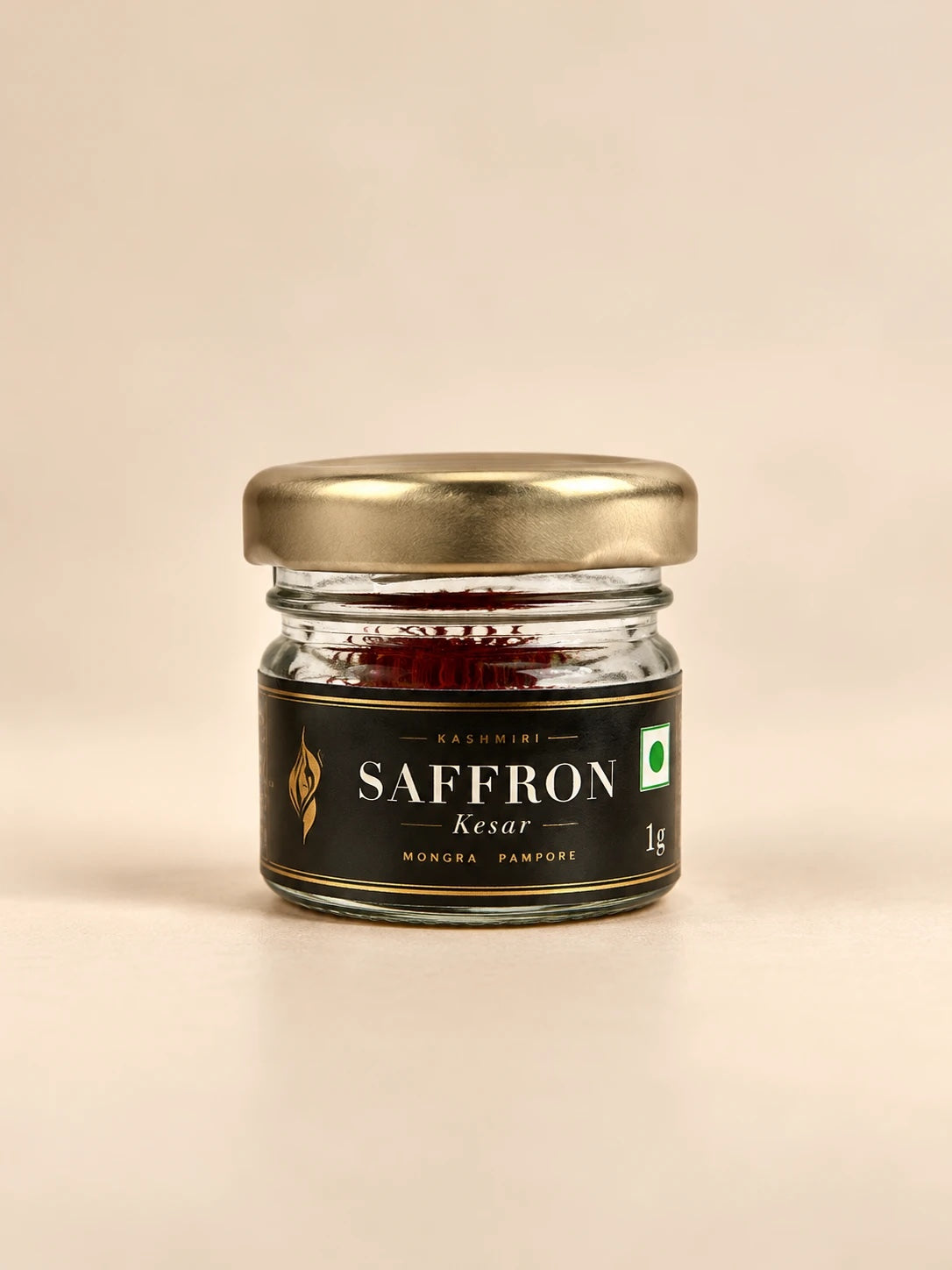
Every pack of our Kashmiri Saffron starts in these fields. Enjoy it the way the valley does, in a cup of Kashmiri kahwa, and learn how to spot the real thing.
The Qashvor Journal
Notes from Kashmir on saffron, dry fruits and the kitchen.


