



Guides
How to spot real Kashmiri saffron: 6 simple checks
Dyed corn silk, safflower petals and padded-out threads are sold as saffron every day. Here are six quick checks you can do at home to make sure yours is the real thing.

In this story 8 sections
Saffron is the most expensive spice in the world by weight, and that is exactly why so much of what is sold as saffron is not the real thing. Dyed corn silk, safflower petals and threads padded out with the pale part of the flower all turn up in markets. The good news: you can check for most of them at home in a few minutes.
First, what real saffron is
Each saffron crocus flower has just three crimson stigmas. In Kashmir the flowers bloom for a few short weeks in autumn and are picked by hand, usually early in the morning, before the stigmas are separated and dried. It takes well over a hundred thousand flowers to make a single kilogram of saffron, which is why the genuine spice is never cheap.
Kashmiri saffron, much of it grown in the fields around Pampore, carries a Geographical Indication (GI) tag, which recognises it as a product with a distinct origin and character.
1. Look closely at the threads
Real saffron threads are deep crimson, flared at one end like a tiny trumpet and narrow at the other. The finest grade, often called Mongra, is only the red part of the stigma. If a pack sold as premium has lots of yellow or white strands, you are paying for the style, the part of the flower that has little colour or flavour.
2. The water test
Drop three or four threads into a small bowl of warm water or milk and wait. Real saffron releases its colour slowly: a golden-yellow glow spreads out over 10 to 15 minutes, and the threads themselves stay red. If the water turns red almost instantly, or the threads go pale, they have been dyed.
3. The rub test
Take one of the soaked threads and rub it gently between your fingers. Genuine saffron stays in one piece and leaves a yellow-orange stain on your skin. Fakes often break apart or turn to mush.
4. Smell it
Good saffron has a strong, distinctive aroma: sweet and honey-like, with a hint of dry hay. Little or no smell usually means it is old, badly stored or not saffron at all.
5. Taste a thread
Real saffron tastes slightly bitter, even though it smells sweet. If a thread tastes sugary, it has probably been coated to add weight.
6. Be wary of a bargain
Because every thread is picked and separated by hand, real saffron cannot be sold cheaply. A very low price, an unclear origin or a pack with no grade information are all good reasons to look elsewhere.
How to store and use saffron
- Store it well. Keep saffron in an airtight container, away from light, heat and moisture. Stored like this, it keeps its colour and aroma for a long time.
- Steep before you cook. Crush the threads lightly and soak them in a few spoonfuls of warm water or milk for 10 to 20 minutes, then add the liquid and the threads to your dish.
- Use a pinch. Five to eight threads are plenty for a cup of kahwa or saffron milk.
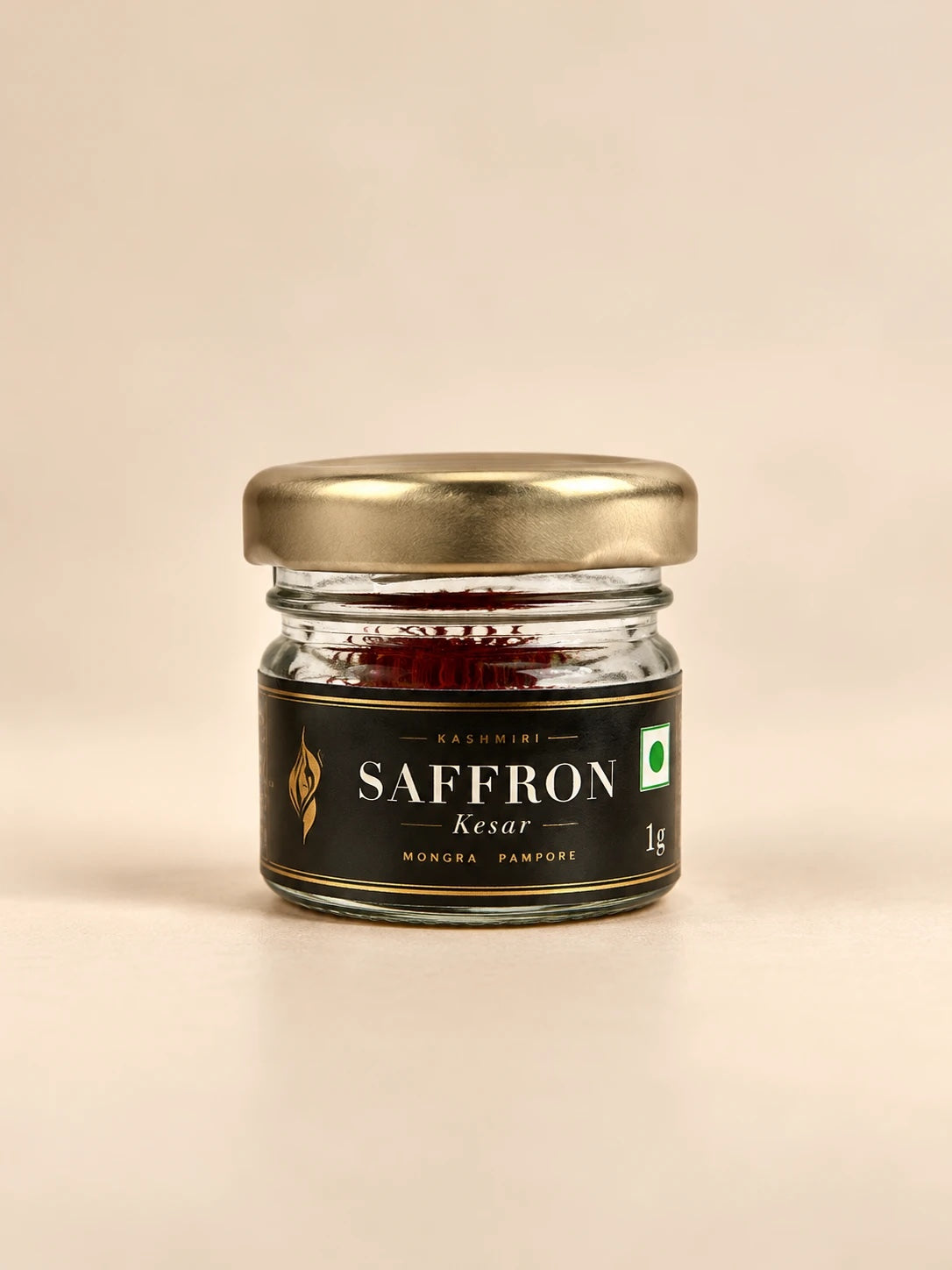
Want to see it at its best? Try a cup of Kashmiri kahwa, or put our Kashmiri Saffron, hand-picked Mongra threads from Pampore, through any of the checks above.
The Qashvor Journal
Notes from Kashmir on saffron, dry fruits and the kitchen.


